
What do UL, CE, TÜV, and CSA marks actually mean, and are they interchangeable?
UL and CSA are North American product safety certifications. CE is the mandatory marking for products sold in the EU. TÜV refers to German technical inspection bodies. These marks are not interchangeable because each represents a different testing scope, standard, and legal jurisdiction.
Understanding the major certification regimes - and the regions they serve
UL, the Underwriters Laboratories, is a North American certification body that tests electrical and electronic equipment against UL safety standards and, for the Canadian market, CSA standards. Inspectors working under the National Electrical Code (NEC) commonly expect listed equipment. A UL mark on a connector or power device indicates that the product has been tested and found to meet rigorous electrical safety, heat dissipation, and failure-mode requirements set for the North American market. CSA, formerly the Canadian Standards Association, serves the same function for Canadian markets and often works in parallel with UL testing since many products need to be safely deployed in both the U.S. and Canada.
CE is the Conformité Européenne marking - the mandatory symbol that manufacturers must affix to equipment sold within the European Union and European Economic Area. The CE mark does not itself certify safety the way UL does; instead, it is a declaration by the manufacturer that the product meets all applicable EU directives, including the Low Voltage Directive and the Electromagnetic Compatibility Directive. For low-voltage equipment such as connectors, the Low Voltage Directive does not require a Notified Body; the manufacturer declares conformity, often backed by test reports from an independent laboratory. The process and the standards differ significantly from UL certification. TÜV is not a single certification but rather the name for German technical inspection bodies - TÜV SUD and TÜV Rheinland are the major ones - that perform testing and inspection services across multiple product categories. A TÜV certification mark is voluntary: it shows that a TÜV body tested the product and monitors its production, which is separate from the manufacturer's CE declaration.
Why the testing scopes and standards differ by region
The North American approach, represented by UL and CSA, evolved from the electrical infrastructure and codes that developed in the United States and Canada. UL standards are detailed and prescriptive, defining exact performance thresholds for electrical strength, temperature rise under rated load, dielectric breakdown, and mechanical durability. A UL-listed connector must pass pull tests, contact resistance tests, and high-pot (high-voltage) isolation tests that simulate years of field use in a short timeframe. This testing regime reflects North American practice and the types of hazards that have historically caused fires or electrical shocks in those markets.
EU standards, by contrast, are often more principle-based. The relevant EU directives set essential safety and electromagnetic compatibility requirements, and manufacturers (or their Notified Bodies) select the appropriate testing standard to demonstrate compliance. This can result in different testing depths or sequences for similar product categories. Additionally, European electrical infrastructure operates at 230V single-phase or 400V three-phase, whereas North America uses 120/240V, 120/208V or 277/480V systems. The voltage and frequency differences mean that a connector tested for North American use may not safely handle the electrical stresses present in a European installation, even if the physical dimensions are similar.
What "interchangeable" really means - and why it is a dangerous assumption
A connector with a UL mark is certified safe for North American networks but carries no guarantee of compliance with EU electrical codes. Similarly, a CE-marked connector may meet European standards but could fail under the electrical demands of a North American circuit. The confusion often arises because a manufacturer might design a connector that can physically mate with connectors from another region, but mating is not the same as safe operation. A touring show that moves from North America to Europe cannot simply carry its UL-listed single-pole connectors into a European venue and assume they will deliver safe power. The voltage, grounding practices, and protective devices are all different. Any adaptation or cross-region use requires careful study of the actual electrical parameters, protective device coordination, and local code requirements at the destination.
For equipment that ships or tours across regions, the safest approach is to confirm the specific certifications required by each destination market and, where possible, source or dual-certify equipment to meet both standards. A connector that carries both UL and CE marks has been tested to both regimes and is documented as safe for deployment in both North America and the EU. This dual certification is more expensive and time-consuming than a single-region certification, but it eliminates ambiguity on job sites and simplifies international logistics for touring rental companies, broadcast operations, and permanent installations serving multiple markets.
Where KUPO Power's connectors meet international certification requirements
KUPO Power's connector families are designed for the regions in which they are deployed. K-LOK 150A single-pole cam-type connectors are cULus Listed (United States and Canada) and K-LOK 400A connectors are UL Listed (United States), both under UL File E332947, for North American touring, film, and live event applications. PowerFit keyed single-pole connectors are TÜV Rheinland certified and CE marked for European high-current work. CEE Form connectors are TÜV certified and CE marked to IEC 60309 for safe intermateability across European and international installations. When equipment is destined for dual-region use, KUPO can provide the certification documents for each family to support the destination market's approval process. The KUPO Power 101 FAQ Hub covers the full context of certification, regional standards, and how to select the right connector family for your market.
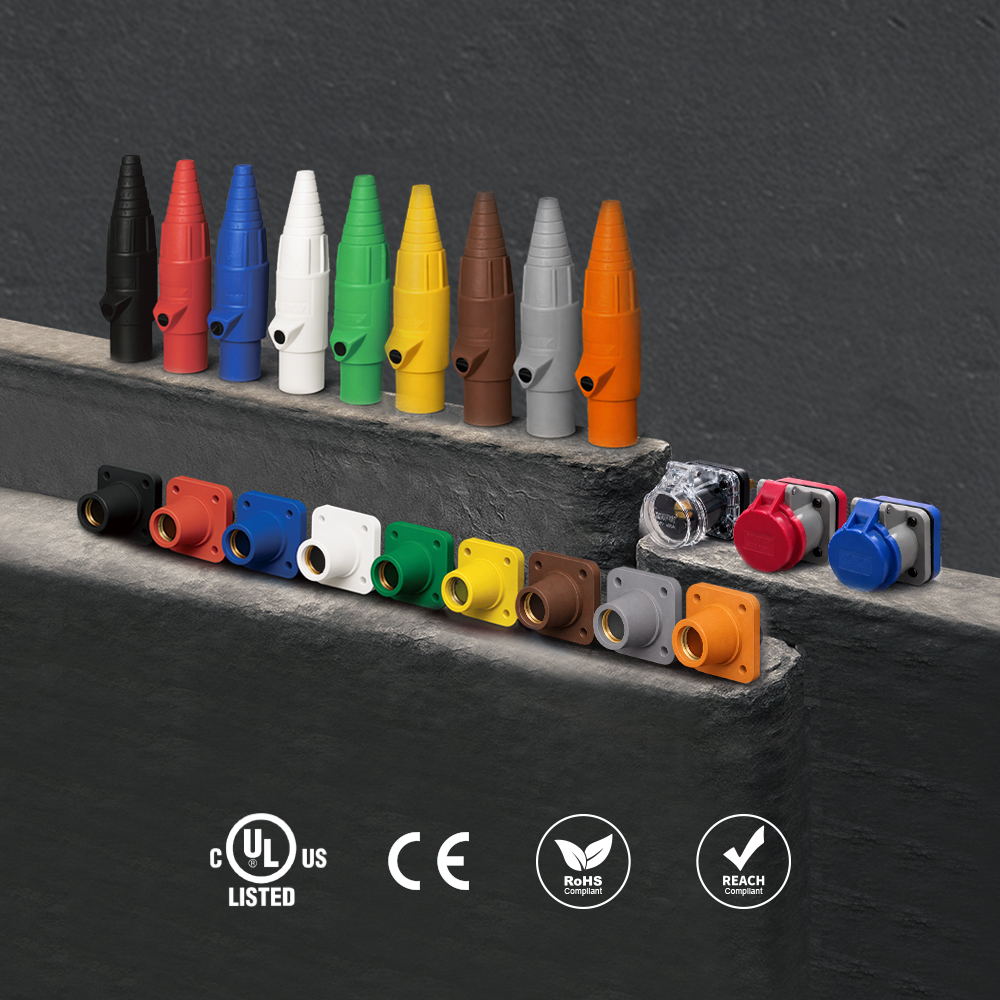 K-LOK 400A Single-Pole Cam-Type Connectors
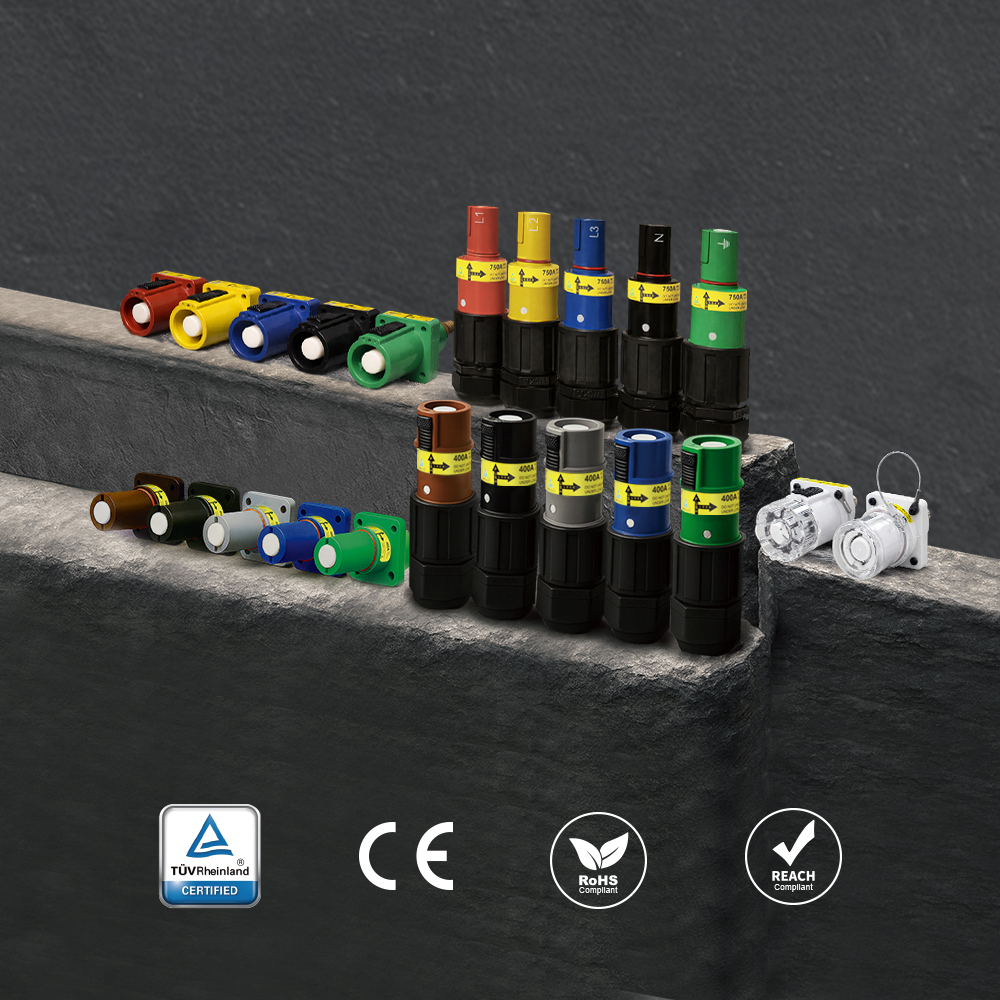 PowerFit 400A Keyed Single-Pole Connectors
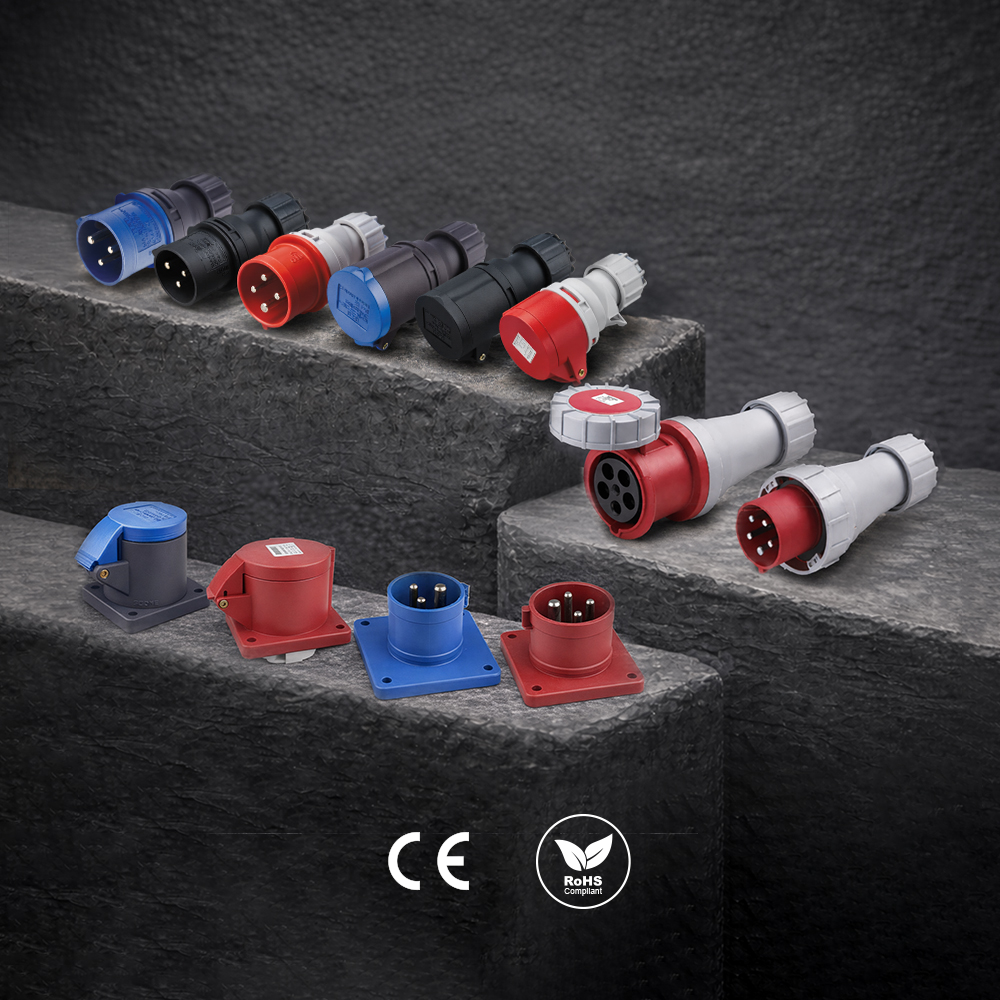 CEE Form Connectors
Have a Question?
Explore the full KUPO Power 101 FAQ Hub for answers to 30 more common questions about industrial power, or ask our team directly about your application.