
What's special about Taiwan's 110V/220V split-phase system, and how does it compare to other regions?
Taiwan typically uses 110V/220V split-phase distribution at 60Hz, similar to North America. 110V serves general outlets and 220V supplies higher-power loads. The 60Hz frequency sets Taiwan apart from much of Europe and parts of Asia at 50Hz. Equipment intended for Taiwan should be matched to both voltage and frequency.
How Taiwan's power system evolved and its resemblance to North America
Taiwan's electrical infrastructure was shaped by Japanese influence during the early 20th century and later by North American technical standards and practices. The island standardized on 60 hertz (cycles per second) as the grid frequency, aligning it with North America and Japan rather than the 50 Hz standard used across Europe and most of Asia. For voltage, Taiwan adopted a split-phase distribution system with 110V for residential and general-purpose outlets and 220V for heavier loads such as air conditioning, water heating, and industrial equipment. This 110V/220V split-phase approach closely mirrors the North American 120V/240V system. In fact, the voltage and frequency compatibility mean that North American equipment designed for 120V/240V at 60Hz will often operate reliably in Taiwan at 110V/220V at 60Hz, particularly for resistive loads like heaters and lighting. Motor-driven equipment experiences slightly lower torque and speed because the voltage is about eight percent lower, but the 60 Hz synchronization keeps the performance close to specification.
The practical consequence is that Taiwan sits in a unique position in Asia. While nearby China operates on 220V/380V at 50Hz, South Korea on 220V at 60Hz, and Japan on 100V at 50Hz-60Hz, Taiwan's 110V/220V at 60Hz standard means that touring productions, rental companies, and equipment manufacturers from North America often find Taiwan is a natural extension of their existing inventory and practices. A touring show that regularly works in North America may travel to Taiwan with minimal electrical conversion, whereas a show moving from Taiwan to the European Union or mainland China would require substantial equipment changes and transformers.
The split-phase architecture and how it handles residential and industrial loads
Taiwan's split-phase system works by dividing the power distribution at the utility level. At the transformer serving a residential area, the secondary side provides two 110V phases that are 180 degrees out of phase with each other, creating a 220V voltage across both phases. A standard residential outlet provides access to either single-phase 110V (one of the two phases) for low-power equipment like lights and small appliances, or 220V (across both phases) for high-power appliances. An individual household may have several 110V circuits for general use and one or two dedicated 220V circuits for large air conditioning units, water heaters, or stoves. This architecture allows the utility to serve both low-power and high-power needs efficiently without requiring separate distribution networks.
The split-phase system also means that load balancing becomes an important consideration in residential areas. If all the homes in a neighborhood tap only one phase of the split-phase supply, the load becomes unbalanced, causing voltage imbalance and overloading one half of the utility transformer winding. To prevent this, electricians in Taiwan distribute circuits between the two phases within a home so that the overall load is as balanced as possible. For temporary installations and touring productions, this same principle applies - if you are drawing 220V from both phases, the load is implicitly balanced; if you are using only 110V circuits from one phase, you should check that the total load is reasonable and won't cause voltage sag or other issues on the local supply.
Comparing Taiwan to North America, Europe, and other Asian regional standards
North America's 120V/240V at 60Hz system is nearly identical to Taiwan's 110V/220V at 60Hz. The roughly 8 percent voltage difference and shared 60 Hz frequency mean equipment designed for one typically operates in the other. Europe operates on 230V/400V at 50Hz, which is incompatible with Taiwan without transformers and frequency converters. Japan uses 100V at 50Hz-60Hz, and South Korea uses 220V at 60Hz. For international equipment movement, frequency alignment is critical; voltage differences within a single system can sometimes be accommodated, but crossing between different frequency regions always requires conversion equipment.
Where KUPO Power's connectors fit into Taiwan's power landscape
KUPO Power connectors used in Taiwan should be selected for the local 110V/220V, 60Hz supply. A connector's rating is a voltage and current rating, so a K-LOK or CEE Form connector works the same at 60 Hz as at 50 Hz; what matters is that its ratings cover the circuit and that its type matches the equipment it plugs into. K-LOK 400A and K-LOK 150A cam-type connectors, common in North American touring, suit productions and temporary installations arriving with North American inventory. For equipment that must remain permanently or semi-permanently in Taiwan, sourcing connectors that are certified for Taiwan's local standards ensures compatibility with inspection authorities and local infrastructure. KUPO Power's documentation states the voltage and current ratings clearly for each product, allowing users and integrators to select the right connector family for Taiwan's power landscape. The KUPO Power 101 FAQ Hub provides regional connector guidance to help you navigate international deployments and regional electrical standards.
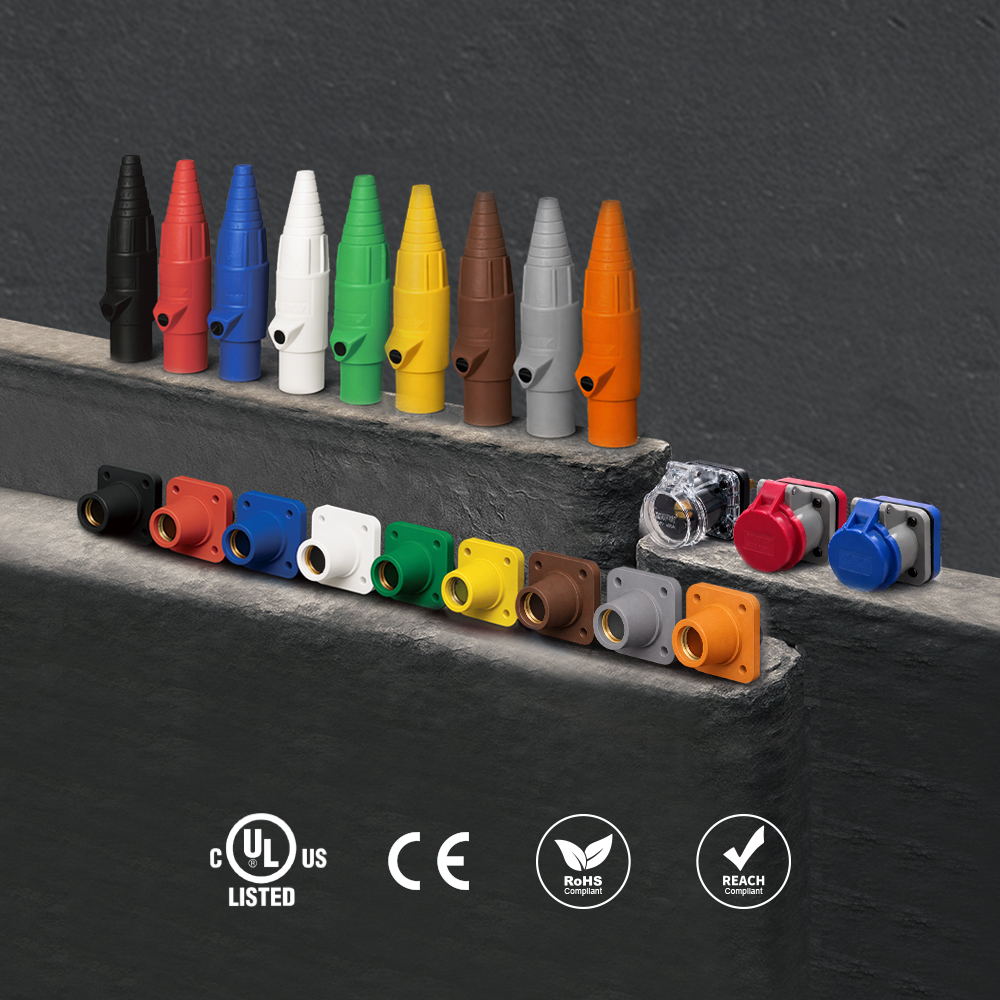 K-LOK 400A Single-Pole Cam-Type Connectors
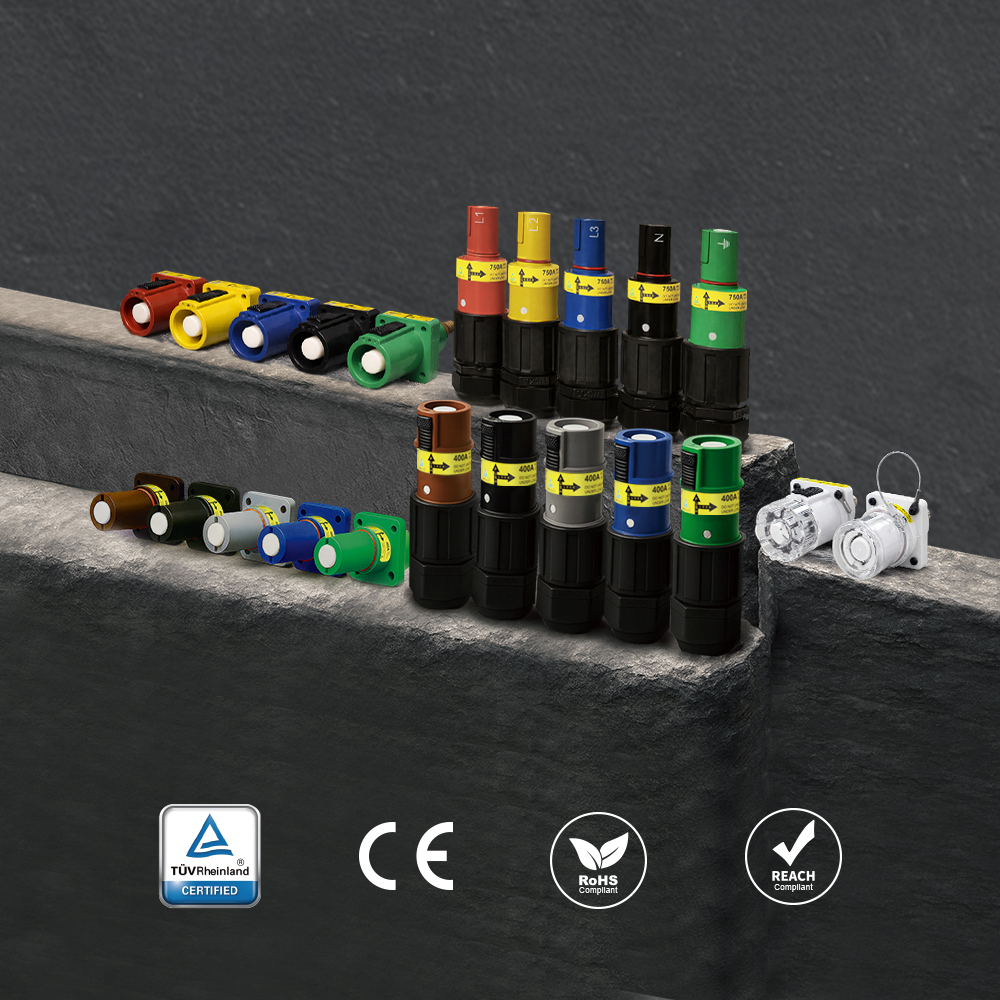 PowerFit 400A Keyed Single-Pole Connectors
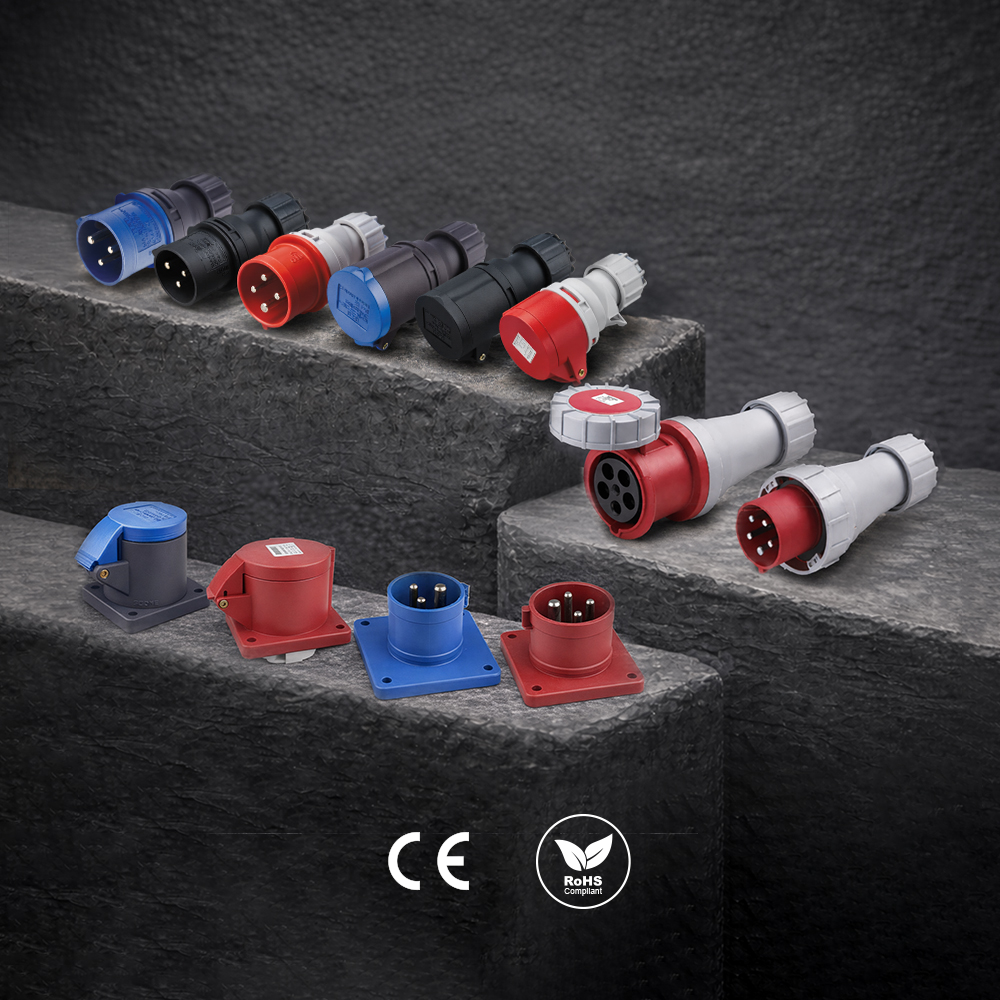 CEE Form Connectors
Have a Question?
Explore the full KUPO Power 101 FAQ Hub for answers to 30 more common questions about industrial power, or ask our team directly about your application.