
Why does the world have different voltages and frequencies, and what does that mean for your equipment?
Different regions standardized on different voltages and frequencies long ago - commonly 120V/60Hz in North America, 230V/50Hz in Europe, 100V/50-60Hz in Japan. Equipment designed for one supply may not operate safely on another. For international use, equipment should be selected and rated for the specific supply it will encounter.
How voltage and frequency got locked into regional infrastructure
In the early days of electrical power distribution, before international standards existed, each country or region chose voltage and frequency independently based on the technology available at the time and the needs of the local industrial base. North America settled on 60 cycles per second (hertz) and split-phase voltages of 120V/240V for residential use and 120V/208V or 277V/480V for industrial use. Europe, working from parallel but separate development, adopted 50 hertz as the standard frequency, with 230V single-phase and 400V three-phase for industrial distribution. Japan used 100V at both 50Hz and 60Hz depending on the region. Once this infrastructure was built - power plants designed to generate the chosen frequency, transformers and switchgear manufactured to handle the chosen voltage, and millions of devices manufactured to the standard - changing became impractical. The cost of rebuilding power generation, distribution, and all connected equipment across an entire country is measured in billions, so the choices made a century ago persist today.
The practical consequence is that the electrical supply you encounter in different regions of the world is fundamentally different in both magnitude and rate of oscillation. Equipment designed and tested for 120V at 60Hz assumes certain characteristics of the power waveform, certain thermal environments under rated load, and certain coordination with protective devices. That same equipment plugged into 230V at 50Hz experiences different stresses, different rates of heating, and different fault response from the protective system. The differences compound when you consider that older European equipment, particularly in industrial settings, may be designed for 220V or 380V rather than the current 230V or 400V standards, further complicating cross-region deployment.
What happens when equipment encounters the wrong voltage or frequency
A motor designed for 120V at 60Hz running on 230V at 50Hz can overheat and fail quickly. The higher voltage increases current and heat; the lower frequency changes torque and speed. Equipment must be specifically rated for the voltages and frequencies it will encounter. Transformers can bridge voltage differences, but frequency conversion requires specialized equipment that adds bulk and cost. For touring productions, the practical approach is to source dual-rated equipment from the outset rather than rely on conversion at the job site.
Regional standards and the role of connectors in voltage and frequency identification
Connectors cannot guarantee the right supply on their own: keying only works when every part follows the same standard, and an adapter or a mislabeled cable defeats it. However, standardized connectors used in industrial installations often incorporate visual or mechanical cues that reinforce the voltage and frequency. IEC 60309, for example, uses different housing colors for different voltage ranges and a different earth-contact position for each voltage and frequency combination, allowing a crew member to visually confirm before making a connection. In North America, single-pole cam-type connectors are not keyed by voltage at all, so color coding and labeling carry the whole job; NEMA plugs, by contrast, use a different blade layout for each voltage and current rating. Even so, enforcement of these standards depends on the discipline of the crew - a determined person can always override a safety system, which is why proper training and clear documentation are essential for international operations.
When equipment ships across borders, the responsibility falls on the supplier and the receiving party to verify that the equipment is rated for the destination supply. A touring show that travels with the wrong equipment, without proper transformers or frequency converters, risks equipment damage, job-site delays, and potential safety incidents. The electrical codes in each region specify what voltages and frequencies equipment must handle, and inspectors at permanent installations will flag equipment that is not properly certified for the local supply. This is why international rental companies maintain separate inventories for North America, Europe, and other regions, or specify equipment that is legitimately dual-rated and certified for multiple markets.
Where KUPO Power's connector families bridge different voltage and frequency regions
KUPO Power connectors are designed and rated for the specific voltage and frequency of the region in which they are deployed. K-LOK 400A and K-LOK 150A single-pole connectors are UL listed for North American installations. PowerFit and CEE Form connectors follow the European certification path (TÜV and CE) and suit 230V single-phase and 400V three-phase systems. A connector's rating is a voltage and current rating that does not change between 50 Hz and 60 Hz, but the equipment, codes and approvals around it do, and KUPO states each product's ratings clearly in its documentation. When equipment moves across regions, the connector choice must change along with the power supply itself - a North American rig using K-LOK connectors cannot be repurposed as a European installation without also changing to the appropriate European connectors and transformers. The KUPO Power 101 FAQ Hub details regional connector standards and how to specify the right family for your market and application.
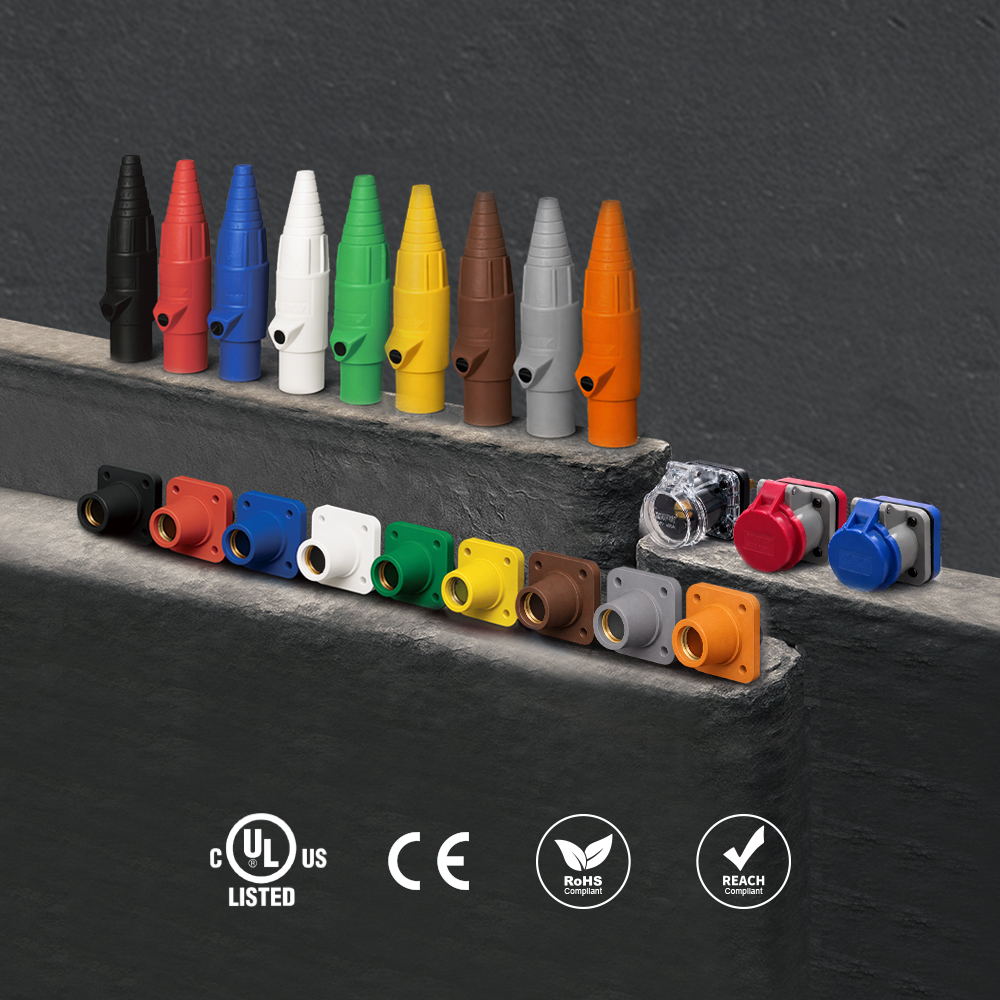 K-LOK 400A Single-Pole Cam-Type Connectors
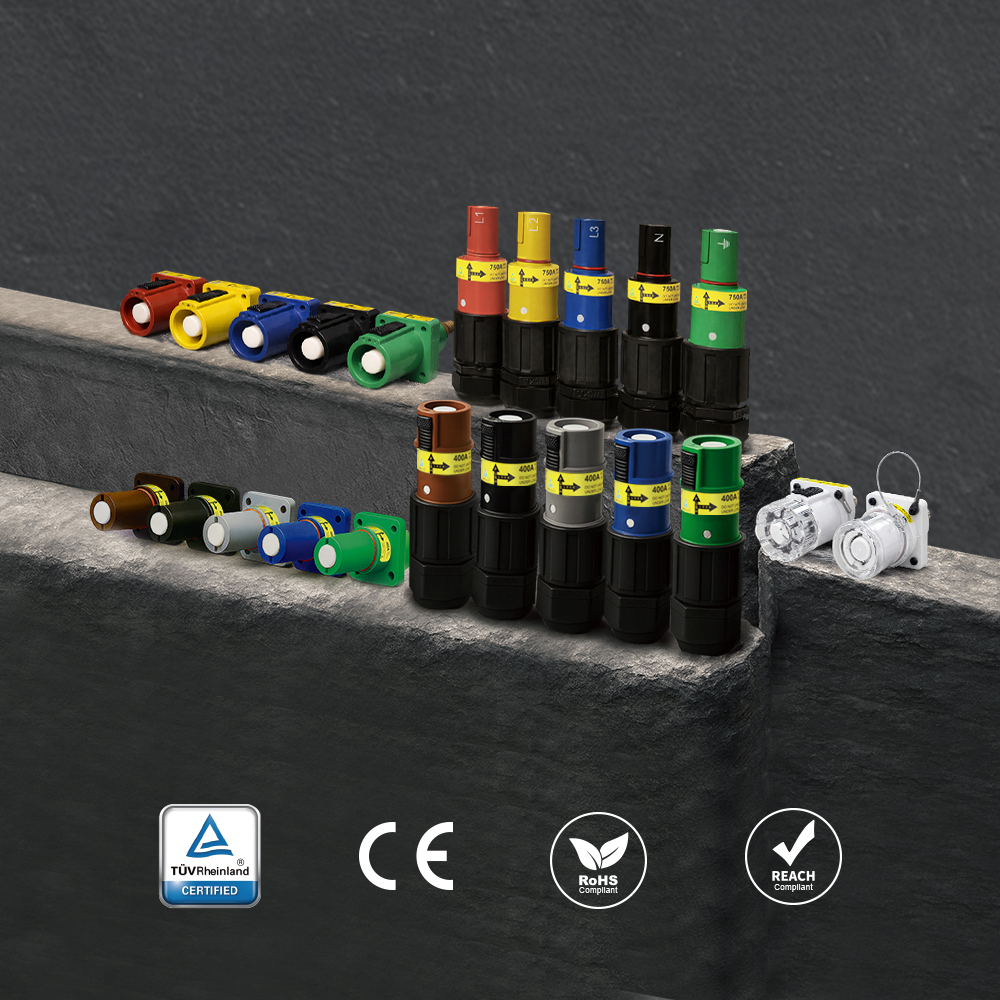 PowerFit 400A Keyed Single-Pole Connectors
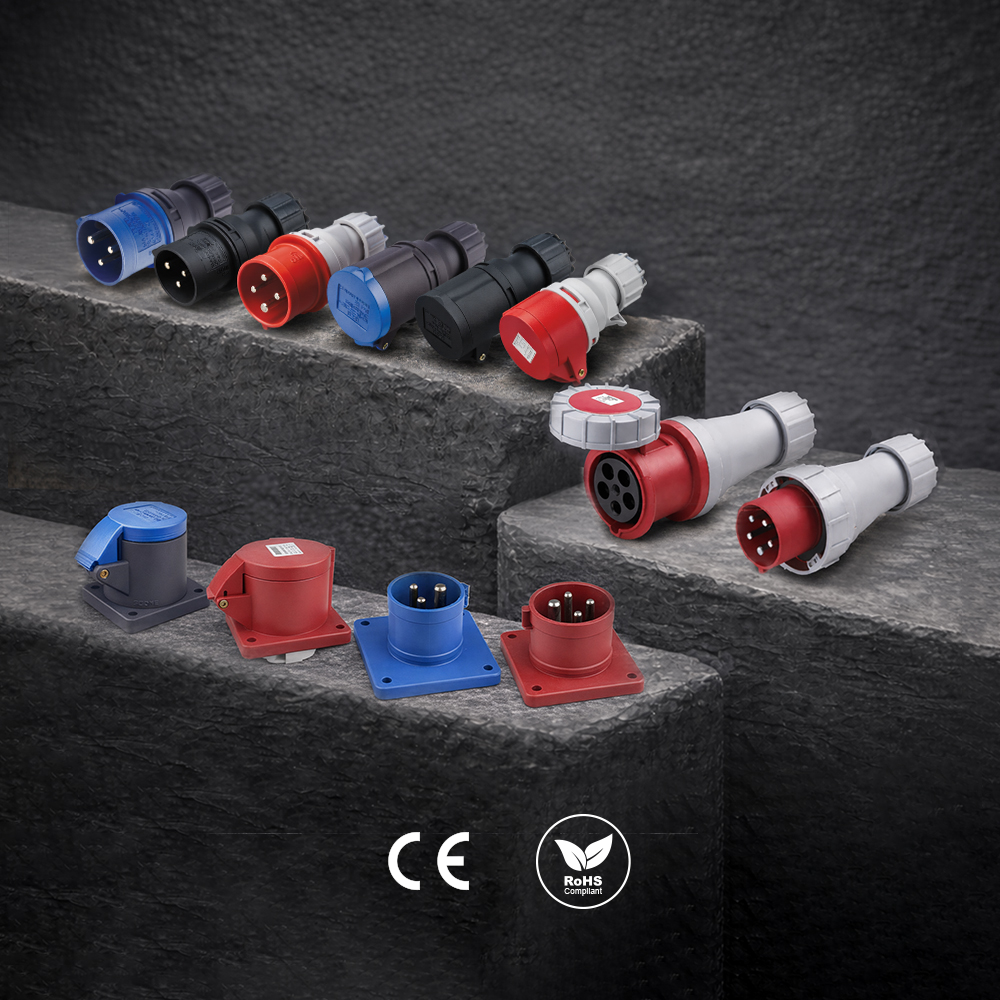 CEE Form Connectors
Have a Question?
Explore the full KUPO Power 101 FAQ Hub for answers to 30 more common questions about industrial power, or ask our team directly about your application.